 ozone
Business guides
More orders do not always mean more cash
Build a weekly cash review that separates money received, invoices still outstanding, and payments coming due.
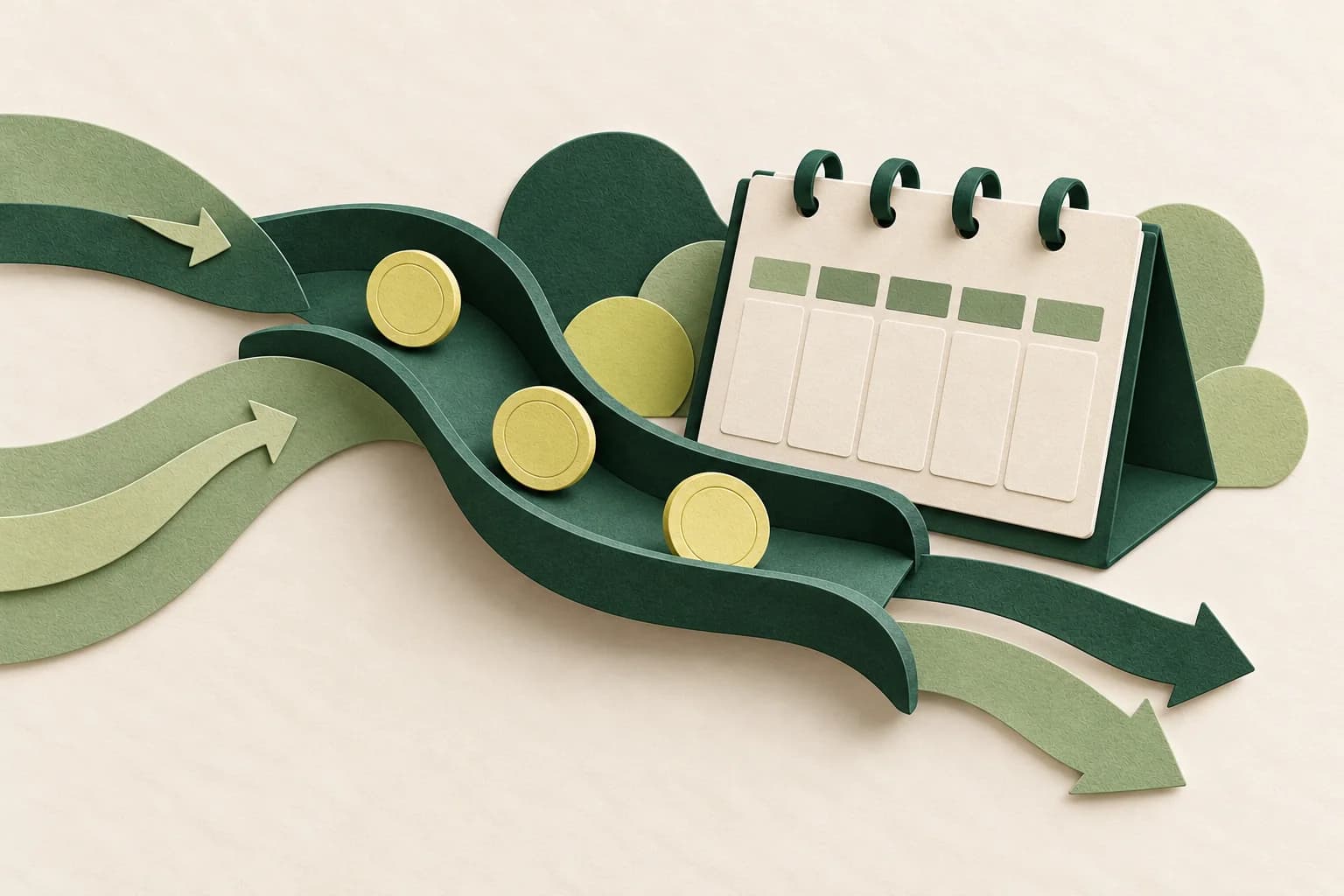
Orders are increasing, but the bank balance is falling. Materials need to be purchased now, while customers will not pay for several weeks. In this situation, sales figures alone cannot tell you whether the business can meet its next commitments.
A weekly cash review makes the timing visible: what money is available, when receipts are expected, and which payments fall due first. You can start with a notebook or spreadsheet rather than waiting for a complicated system.
Separate sales, profit, and cash
An order value is not automatically money received. An unpaid invoice cannot yet pay for materials. Equally, a bank balance is not all profit or money available for an owner to withdraw. Some of it may be needed for suppliers, refunds, or other commitments.
This review focuses on money moving in and out. It does not replace a profit and loss statement or formal financial reporting. Its purpose is simpler: to identify gaps between receipts and payments.
Start with a verifiable balance
Choose a consistent review day. Record business bank balances and cash on hand at the same point in time, then reconcile them against transaction evidence. If personal money is still mixed in, identify those transactions rather than silently treating everything as business activity.
Do not count transfers between your own business accounts as new income. The money has only changed location. Track funds with restricted uses, such as money held on behalf of someone else, separately so they do not appear to be freely available cash.
Then divide the records into three groups:
- Actual: money already received or paid.
- Forecast: receipts and payments expected to happen.
- Uncertain: transactions whose amount or timing still needs confirmation.
Look four weeks ahead
For each week, record an opening balance, expected cash in, expected cash out, and closing balance. Four weeks is a practical starting point for this guide, not a mandatory standard for every business.
Use the simple formula: closing balance = opening balance + cash in − cash out. One week's closing balance becomes the next week's opening balance.
An illustrative first week might look like this:
- Opening balance: Rp3,000,000.
- Expected customer receipts: Rp2,000,000.
- Materials, rent, and other payments due: Rp4,000,000.
- Forecast closing balance: Rp1,000,000.
Now test a scenario in which the customer pays one week late. Without that Rp2,000,000 receipt, the forecast closing balance becomes negative Rp1,000,000. A negative planning figure identifies a funding gap; it does not mean your bank account automatically permits an overdraft.
Respond before payments fall due
When the forecast shows a shortfall, check the assumptions first. Has the customer received the invoice? Must all materials be purchased at once? Can a non-urgent expense wait?
Contact the relevant party before the deadline if you need to propose a different payment schedule. Do not assume a supplier will agree, and do not change the recorded date as though a new agreement already exists. Additional owner funding or borrowing is not sales income either. Record it separately and consider any repayment obligations.
Compare the plan with reality
At the next review, replace the previous week's estimates with actual transactions. Record why figures differed: a customer delay, an unexpected purchase, or a cost you missed. Update the following weeks using the latest information.
The goal is not a spreadsheet that always looks positive. It is earlier warning and better-informed decisions. Start by clarifying payment terms and separating business and personal money.
Sources and scope
- business.gov.au — Set up a cash flow statement: opening balances, receipts, payments, closing balances, and labelling estimates.
- business.gov.au — Guide to managing cash flow: regular reviews and comparisons between forecasts and actual figures.
Sources accessed 20 October 2026. The amounts and four-week period are editorial examples. This guide is not investment, tax, or accounting advice; Australian rules in the sources are not presented as Indonesian obligations.
Keep reading
Business guides
Agree payment terms before you send the invoice
Make due dates, payment methods, and follow-ups explicit so collecting payment does not depend on guesswork.

Business guides
Separate business and personal money, starting with the records
Distinguish operating transactions, owner contributions, and personal withdrawals to make business finances easier to understand.